
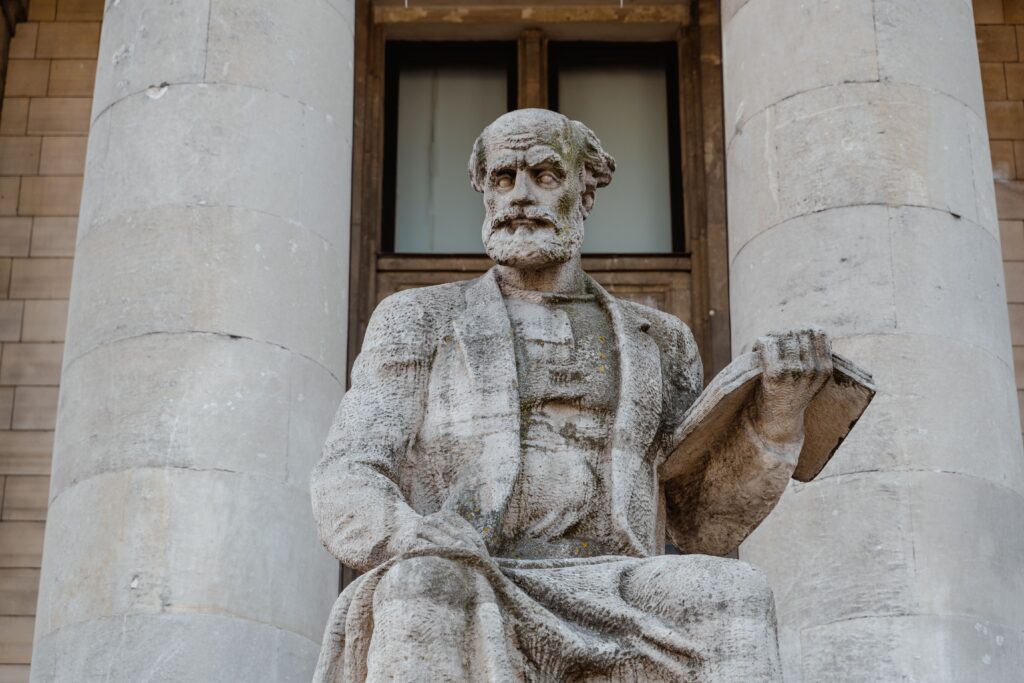
“The highest achievement of mentorship is not the creation of loyal followers nor rebellious successors, but the gradual transformation of authority into developmental dialogue.”
Introduction
Every generation inherits authorities.
Children inherit parents.
Students inherit teachers.
Scientists inherit mentors.
Psychotherapists inherit theoretical traditions.
No intellectual discipline illustrates this developmental process more vividly than the history of psychoanalysis. Since Sigmund Freud founded psychoanalysis at the beginning of the twentieth century, successive generations have repeatedly confronted the same developmental question:
What should one do with the authority of the teacher?
Traditional histories describe these developments primarily as theoretical disagreements. Jung challenged Freud over the collective unconscious. Adler emphasized social interest. Horney criticized biological determinism. Anna Freud expanded ego psychology. Margaret Mahler developed separation-individuation theory. Lou Andreas-Salomé explored love, narcissism, and spirituality.
While these theoretical differences are important, they may represent something psychologically deeper.
Each thinker also enacted a different developmental relationship with authority itself.
The present essay proposes the Developmental Transformation of Authority (DTA) as a framework for understanding how mentorship evolves across human development. Rather than viewing authority simply as something to obey or reject, DTA conceptualizes authority as progressively reorganized throughout the lifespan. The history of psychoanalysis provides a remarkable illustration of this developmental progression.
Authority as a Developmental Process
Authority is not merely social power.
Developmentally, authority functions as an organizing relationship.
Infants initially borrow emotional regulation from caregivers.
Students borrow intellectual organization from teachers.
Therapists initially borrow clinical judgment from supervisors.
Healthy authority therefore serves a temporary developmental function.
Its ultimate purpose is not permanent dependence.
Nor is it eventual rebellion.
Its deepest purpose is the gradual construction of an increasingly autonomous psychological organization capable of continuing development beyond the original mentor.
The developmental success of authority should therefore be measured not by obedience but by transformation.
Anna Freud: Authority Internalized
Anna Freud’s developmental relationship with authority was unlike that of any other psychoanalyst.
Her mentor was simultaneously her father.
She entered psychoanalysis through intimate collaboration with Sigmund Freud, assisting his work, translating his writings, and eventually becoming one of the principal developers of ego psychology.
Rather than rejecting Freud, Anna gradually internalized his authority.
She expanded his ideas while preserving the continuity of the psychoanalytic tradition.
Within the DTA framework, Anna represents developmental internalization.
Authority becomes integrated into the developing ego without requiring rupture.
Her achievement was not a revolution.
It was a consolidation.
Yet internalization alone does not complete developmental transformation.
The student remains primarily the guardian of the master’s legacy.
Margaret Mahler: Authority Extended
Margaret Mahler entered psychoanalysis through the Freudian tradition but gradually shifted its center of gravity.
Rather than beginning with adult psychopathology, she turned her attention toward infants and mothers.
Careful observation became increasingly important alongside inherited theory.
Authority gradually shifted from teacher to evidence.
Mahler did not reject psychoanalysis.
She expanded it through developmental observation.
Her work illustrates another transformation of authority.
The mentor’s ideas become the starting point for new empirical discovery.
Authority evolves through extension rather than preservation.
Karen Horney: Authority Liberated
Karen Horney’s developmental trajectory represents a more dramatic transformation.
Initially trained within orthodox Freudian psychoanalysis, she increasingly questioned Freud’s theories of female psychology, sexuality, and neurosis.
Rather than preserving inherited authority, she confronted it.
She argued that many forms of psychological suffering emerged from culture, relationships, and the “tyranny of the shoulds” rather than instinct alone.
Her departure from orthodox psychoanalysis reflected more than intellectual disagreement.
It represented developmental liberation.
Authority was no longer internalized uncritically.
It became subject to reflective examination.
Within DTA, Horney exemplifies the movement from inherited authority toward authentic self-authorship.
Lou Andreas-Salomé: Authority Reorganized
Lou Andreas-Salomé represents perhaps the most unusual developmental transformation.
Throughout her life she encountered a succession of powerful authorities.
Her childhood relationship with God.
Her intellectually encouraging father.
Her mentor Hendrik Gillot.
Friedrich Nietzsche.
Sigmund Freud.
Yet she repeatedly refused permanent psychological dependence upon any of them.
She neither became a disciple nor an iconoclast.
Instead, authority gradually became dialogue.
Her correspondence with Freud demonstrates mutual respect rather than unquestioned obedience.
She remained psychologically independent while maintaining genuine collaboration.
Lou therefore illustrates an advanced form of developmental authority.
Authority becomes a relationship rather than hierarchy.
Teachers and students increasingly become colleagues.
The Missing Developmental Step
Each of these developmental pathways represents genuine psychological achievement.
Internalization.
Extension.
Liberation.
Reorganization.
Yet each also leaves an unanswered question.
What becomes of authority after autonomy has been achieved?
Neither preserving tradition nor rejecting it fully explains how mature individuals continue developing throughout adulthood.
The Developmental Transformation of Authority proposes a further developmental possibility.
Authority eventually ceases to reside primarily in one person.
Instead, it becomes distributed across developmental dialogue.
Mentor and student become collaborators.
Each contributes to the other’s continuing growth.
Authority is no longer exercised over another person.
It is exercised for another person’s development.
Developmental Dialogue
Developmental dialogue differs fundamentally from traditional hierarchical mentorship.
The mentor no longer seeks disciples.
The student no longer seeks replacement authorities.
Instead, both individuals recognize that development remains lifelong.
The mentor contributes experience.
The student contributes fresh perspectives.
Each expands the psychological organization of the other.
The relationship itself becomes the developmental authority.
Within such dialogue, disagreement is not experienced as disloyalty.
Nor is independence experienced as abandonment.
Development becomes collaborative.
The highest purpose of mentorship is therefore not replication.
It is transformation.
Rethinking Success in Mentorship
Academic culture often evaluates mentors by the number of loyal students they produce.
Other traditions celebrate students who overthrow their teachers.
Both standards remain incomplete.
A mentor who merely reproduces followers limits intellectual evolution.
A student who rebels merely for independence risks rejecting wisdom together with authority.
Developmental maturity requires another possibility.
The greatest mentors prepare students to surpass them.
The greatest students preserve what is valuable while transforming what remains incomplete.
Neither loyalty nor rebellion becomes the defining measure of success.
Instead, success is measured by whether the relationship gradually evolves from dependence toward collaborative development.
Implications Beyond Psychoanalysis
Although illustrated through psychoanalytic history, the Developmental Transformation of Authority extends far beyond psychology.
Parents ultimately succeed when children become psychologically independent adults capable of forming reciprocal relationships.
Teachers succeed when students become original thinkers.
Leaders succeed when organizations no longer depend exclusively upon them.
Therapists succeed when clients internalize reflective capacities rather than permanent therapeutic dependence.
Healthy religions cultivate mature conscience rather than perpetual submission.
Healthy civilizations organize institutions around developing autonomous, empathic citizens rather than obedient followers.
In every domain, the developmental endpoint is not authority itself.
It is the transformation of authority into shared developmental responsibility.
Conclusion
The history of psychoanalysis reveals more than the evolution of psychological theory.
It reveals the evolution of authority itself.
Anna Freud demonstrated the creative internalization of authority.
Margaret Mahler extended authority through empirical observation.
Karen Horney transformed authority through critical authenticity.
Lou Andreas-Salomé reorganized authority into collegial dialogue.
Together, they illuminate a developmental progression that extends beyond both obedience and rebellion.
The Developmental Transformation of Authority proposes one final step.
The highest form of mentorship is not the production of loyal followers.
Nor is it the celebration of rebellious successors.
It is the gradual creation of autonomous collaborators who continue expanding one another’s development throughout life.
Perhaps this has always been the deepest purpose of authority.
Not to remain authority forever.
But to make itself progressively unnecessary by cultivating individuals capable of becoming developmental partners in the ongoing growth of humanity.
Developmental Transformation of Authority Through Mentorship
A Comparative Developmental Analysis
| Thinker | Primary Mentor/Authority | Initial Relationship | Developmental Transformation | Final Position |
|---|---|---|---|---|
| Anna Freud | Sigmund Freud (father) | Daughter → disciple | Internalized and expanded | Custodian of the tradition |
| Margaret Mahler | Vienna psychoanalytic community (especially Helene Deutsch, August Aichhorn, and the Freudian tradition) | Student | Empirical extension | Developmental scientist |
| Karen Horney | Karl Abraham, Hanns Sachs, Karl Landauer; initially Freudian orthodoxy | Student | Critical liberation | Independent founder |
| Lou Andreas-Salomé | Hendrik Gillot → Nietzsche → Freud | Seeker → colleague | Relational reorganization | Intellectual equal |
| Five-Stage Theory | Integrates all predecessors | Dialogue | Developmental partnership | Collaborative authority |