
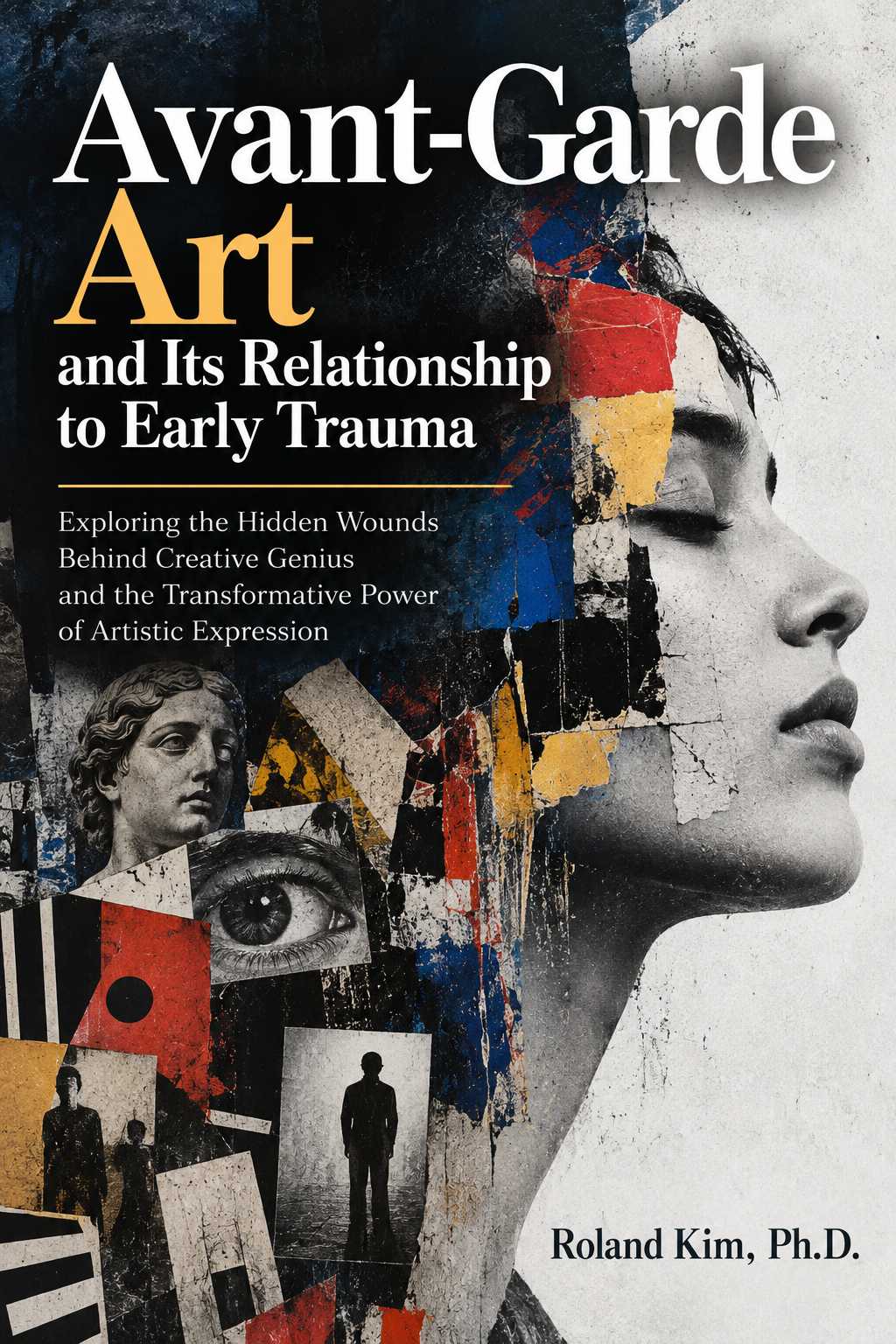
Avant-Garde Art and Its Relationship to Early Trauma
Roland Kim
About This Book
This book explores avant-garde art through a psychological lens, asking how early trauma, personality development, rebellion against convention, and the search for new forms of expression may intersect. It approaches these connections as psychological interpretation rather than reducing artistic creativity to a single cause.
What You’ll Explore
The origins and motivations of avant-garde art; its possible relationship to early trauma; its therapeutic potential; and case studies across painting, film, music, performance, and fashion. Artists and movements include Dalí, Picasso, Duchamp, Kahlo, Buñuel, Lynch, Godard, Kurosawa, John Cage, the Velvet Underground, punk, industrial music, hip-hop, Vivienne Westwood, Alexander McQueen, and others.
Who This Book Is For
For readers interested in psychology, trauma, creativity, art history, film, music, fashion, and the Five-Stage Model—and especially those curious about the psychological forces that can accompany experimentation and rebellion in art.